Translating discovery into clinical reality.
Regulatory strategy, chemistry, manufacturing and controls, and IND-enabling development for cell and gene therapy programs advancing from discovery research to first-in-human investigation. A single accountable interface among the sponsor, the Agency, and the manufacturer.
Where the practice advises
Programs rarely fail on the science alone. They fail at the interfaces: between discovery research and process development, between the sponsor and its contract manufacturer, between the nonclinical package and the question the Agency will in fact pose. Crawling Stone advises across those interfaces so that each decision is settled before the activity that depends upon it.
- Discovery researchLead candidate nomination on evidence-based criteria; Target Product Profile and product thesis; Proof of concept in disease-relevant models; Platform IP position and freedom to operate; Integrated development plan and go/no-go gate
- IND-enabling studiesNonclinical package scoped to the intended clinical use; GLP-compliant toxicology and biodistribution; Pharmacology and dose justification; Off-target and genomic integrity assessment for edited products; Module 4 study reports authored for submission
- INTERACT and Pre-INDBriefing document with questions by discipline; CMC, nonclinical, and clinical plans presented for alignment; Meeting chaired on the sponsor's behalf; Agency feedback converted into a revised development plan; Expedited-pathway and rare-disease designation strategy
- CMC developmentProcess development and scale-up; Control strategy: CQAs, CPPs, in-process controls; Release specifications, potency assurance, stability; CDMO selection, Quality Agreement, technology transfer; Process qualification runs and master batch record
- IND submissionModule 3 CMC and Module 4 nonclinical content, co-developed with the sponsor's authors; Clinical protocol and Investigator's Brochure alignment; Submission-ready package; 30-day Agency review with clinical-hold risk mitigated; Response to information requests
- First-in-humanClinical site and starting-material readiness; IRB communication and site initiation; Drug product release and Certificate of Analysis; Chain of identity, chain of custody, cold chain; Person-in-plant oversight of clinical lots
What we do
Five services, each scoped as discrete work packages with a named owner for every deliverable.
Regulatory strategy and FDA engagement
For sponsors preparing for INTERACT, Pre-IND, or IND submission
Crawling Stone formulates the regulatory strategy for a cell or gene therapy program and carries it into the relationship with the Agency: authoring the briefing documents for INTERACT, Pre-IND, and Type C meetings, chairing those meetings on the sponsor's behalf, and partnering with the sponsor's scientific and manufacturing teams to develop the IND Module 3 and Module 4 content and the Target Product Profile that follow from them.
CMC and manufacturing strategy
For programs defining a process, selecting a CDMO, or scaling toward clinical manufacture
The practice defines the control strategy and directs process development, scale-up, and technology transfer. Having served as the sole client-side point of contact for CDMO manufacture of clinical drug product, Crawling Stone brings that oversight model to sponsors that lack a manufacturing organization of their own.
Preclinical and IND-enabling development
For programs advancing from proof of concept to a submission-ready nonclinical package
Crawling Stone designs and executes the IND-enabling study program as Study Director and, with the sponsor's scientific team, develops the Module 4 reports that carry it into the submission. Where no animal model of the disease exists, the practice has secured Agency alignment on patient-derived cellular models as the basis for proof of concept.
Program leadership through the discovery-to-clinic transition
For teams requiring a single accountable owner across the laboratory, the manufacturer, and the clinic
The practice leads the program, represents CMC on the executive asset team, and directs the cross-functional work that carries a candidate from discovery research into clinical investigation, serving as the interface between manufacturing and clinical operations, including IRB communication and site readiness for drug product administration.
Institutional portfolio strategy
For technology transfer offices, academic medical centers, and institutional investors
Academic commercialization functions are constituted to generate inventions, fund validation, and form companies. What they characteristically lack is independent sponsor-side judgment: the integration of product definition, indication, CMC, regulatory, nonclinical, clinical, cost, and financing considerations into a single decision before translational capital is committed.
Selected work
Client-side engagements across T cell, TIL, and nonviral genome-editing programs.
Nonviral CRISPR ocular gene therapy: two programs to INTERACT
Authored the INTERACT briefing documents and chaired both CBER meetings for two LNP-formulated genome-editing products for inherited retinal disease, establishing alignment on proof-of-concept models, nonclinical scope, and CMC strategy.
Read the engagementGD2-targeted CAR-T: regulatory and CMC oversight through IND
Sponsor-side regulatory and CMC oversight of an academic CAR-T program manufactured on an automated CDMO platform, from control strategy and potency assurance through Module 3 and Module 4 review.
Read the engagementCAR-T manufacturing platform strategy in an allogeneic transplant setting
Comparative assessment of viral, transposon, CRISPR knock-in, and nonviral mRNA manufacturing platforms for a CAR-T component added to a licensed allogeneic transplant product, with the program structured as a standalone IND.
Read the engagementThe principal
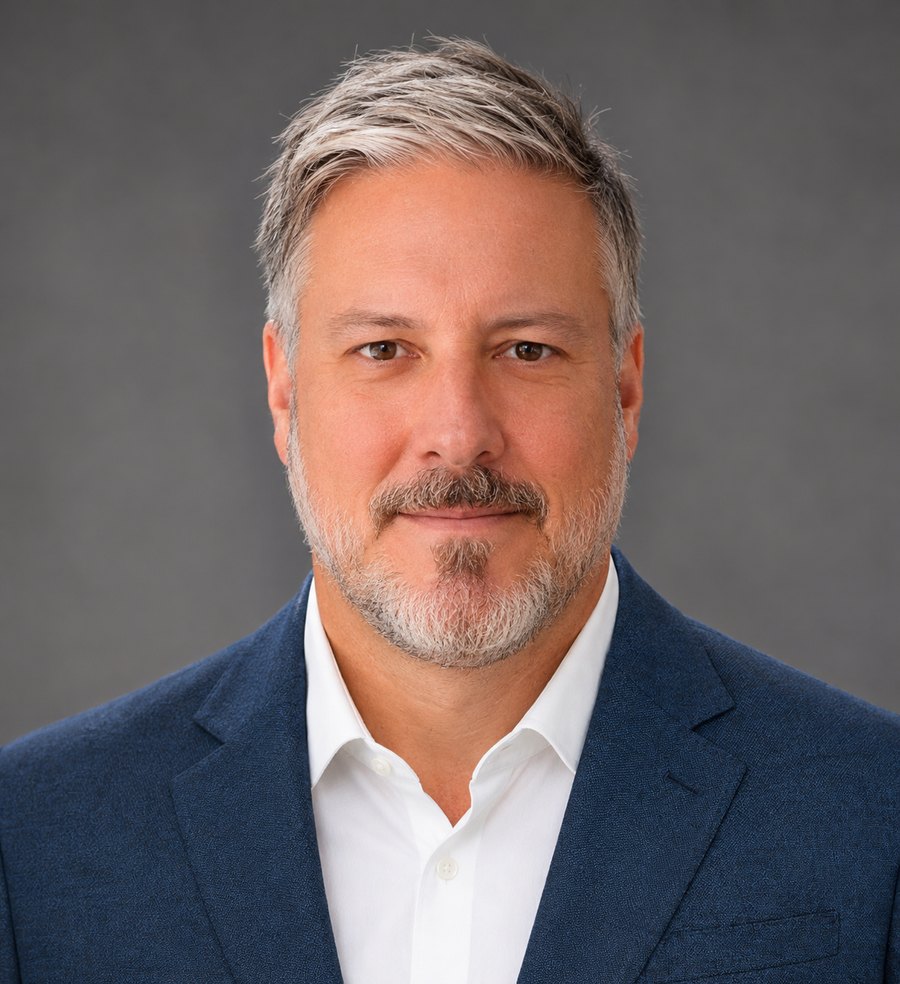
Nicholas P. Shinners, PhD
Founder and Principal Consultant. More than a decade in industry advancing cell and gene therapy assets from discovery research into first-in-human investigation: program lead for three T cell therapy INDs at Bellicum Pharmaceuticals, program lead for TCR T cell assets at BlueSphere Bio, Senior Director of Cell Therapy Process Development and Technical Operations at Nurix Therapeutics, and technical advisor to the intellectual property practice of DLA Piper. PhD in Microbiology and Immunology from Vanderbilt University, with postdoctoral training at Harvard Medical School and MD Anderson Cancer Center.
Begin with a program, a question, or a portfolio.
Most engagements begin with a short call to establish where the program stands and which decision comes next, whether it concerns regulatory strategy, manufacturing, nonclinical development, clinical readiness, intellectual property, or the disposition of a portfolio.